The Passes
Keeping The Ball
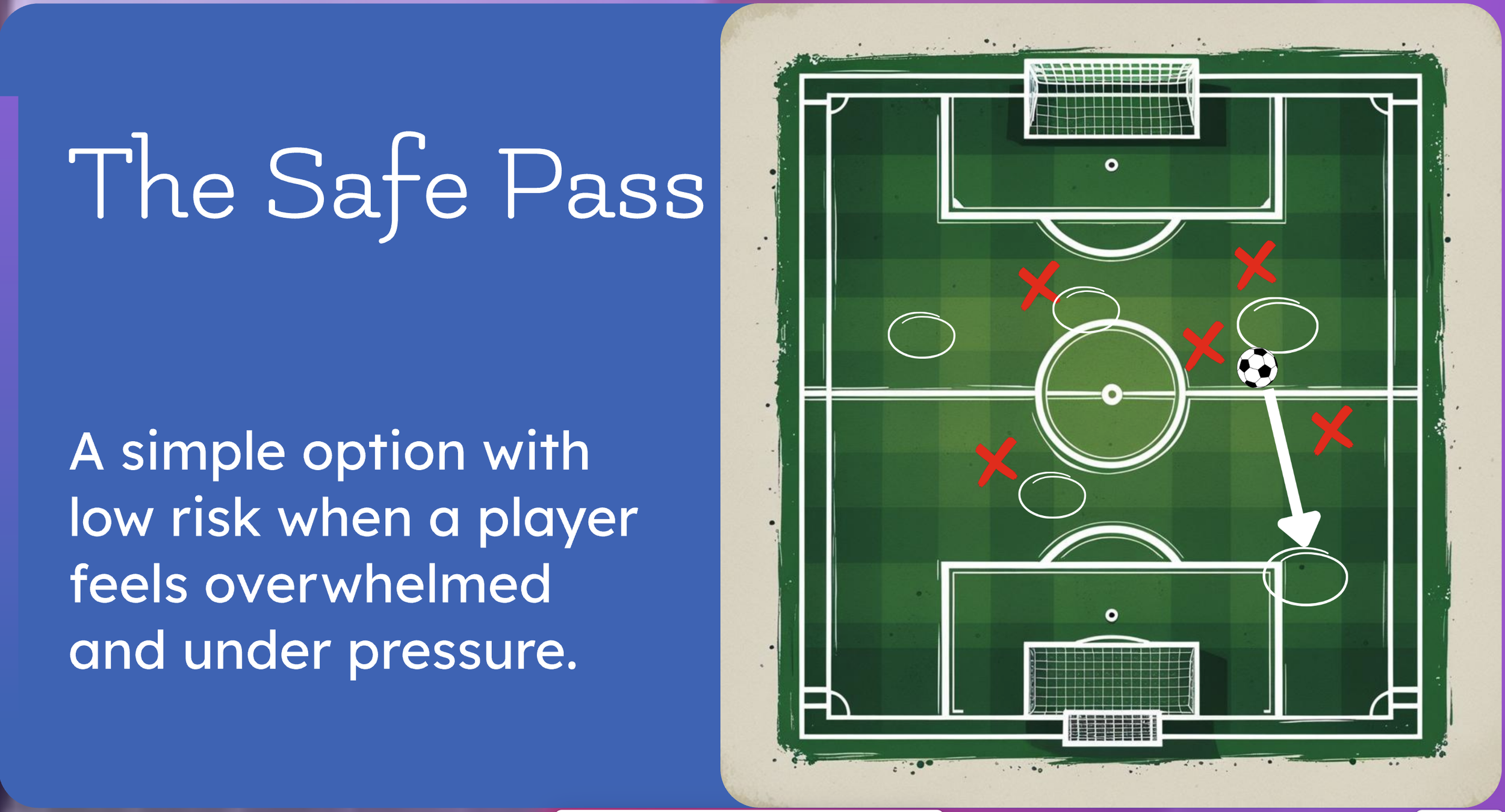
The Safe pass
When pressure is on playing a safe pass is the best option. Maybe your organization or club is feeling the pressure from parents, politics or other outside factors, but you want to still do something versus nothing.
Doing actions that are equivalent to making a safe pass on the soccer/football field have the least risk and allows your team to keep the ball (ie. continue to create brave play spaces). Sometimes this even means passing backwards!
It could be something very simple that you or a coach could do to help one player feel like they belong there.
Some examples:
1. Center the person being harmed
2. Be informed of club/org's gender policies
the combo pass
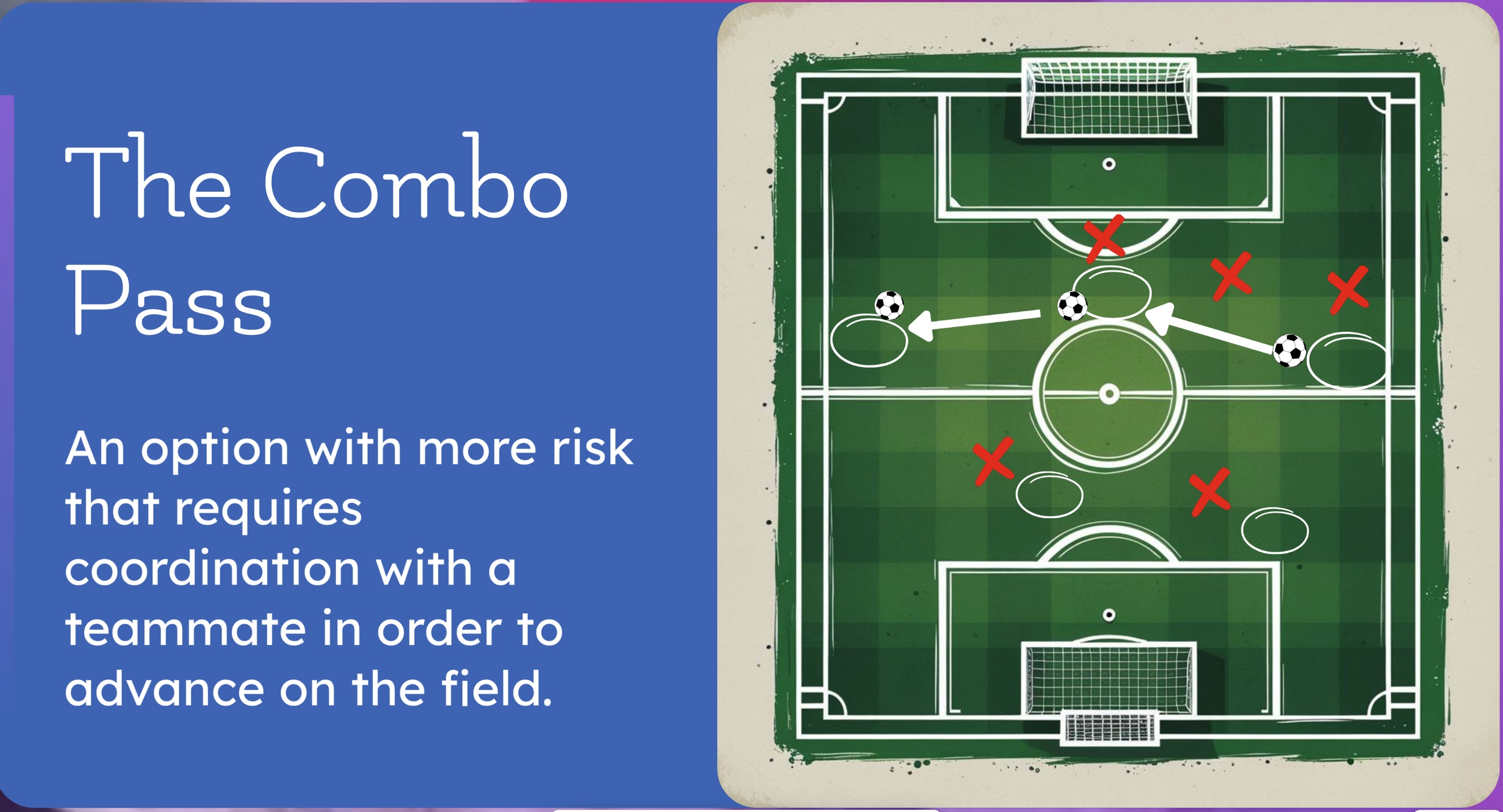
This pass requires coordination with others, which involves more complex steps and time. If your organization or club is considering taking action at this level you’ve likely had some success with several safe passes. Remember you can always go back to a safe pass if at anytime during this action you’re met with increased pressure. The goal is to keep the ball (ie. continue to create brave play spaces)!
Some examples:
1. Gender mix teams of 5-7 year olds
2. Experiment with mix gender tryouts
THe through ball
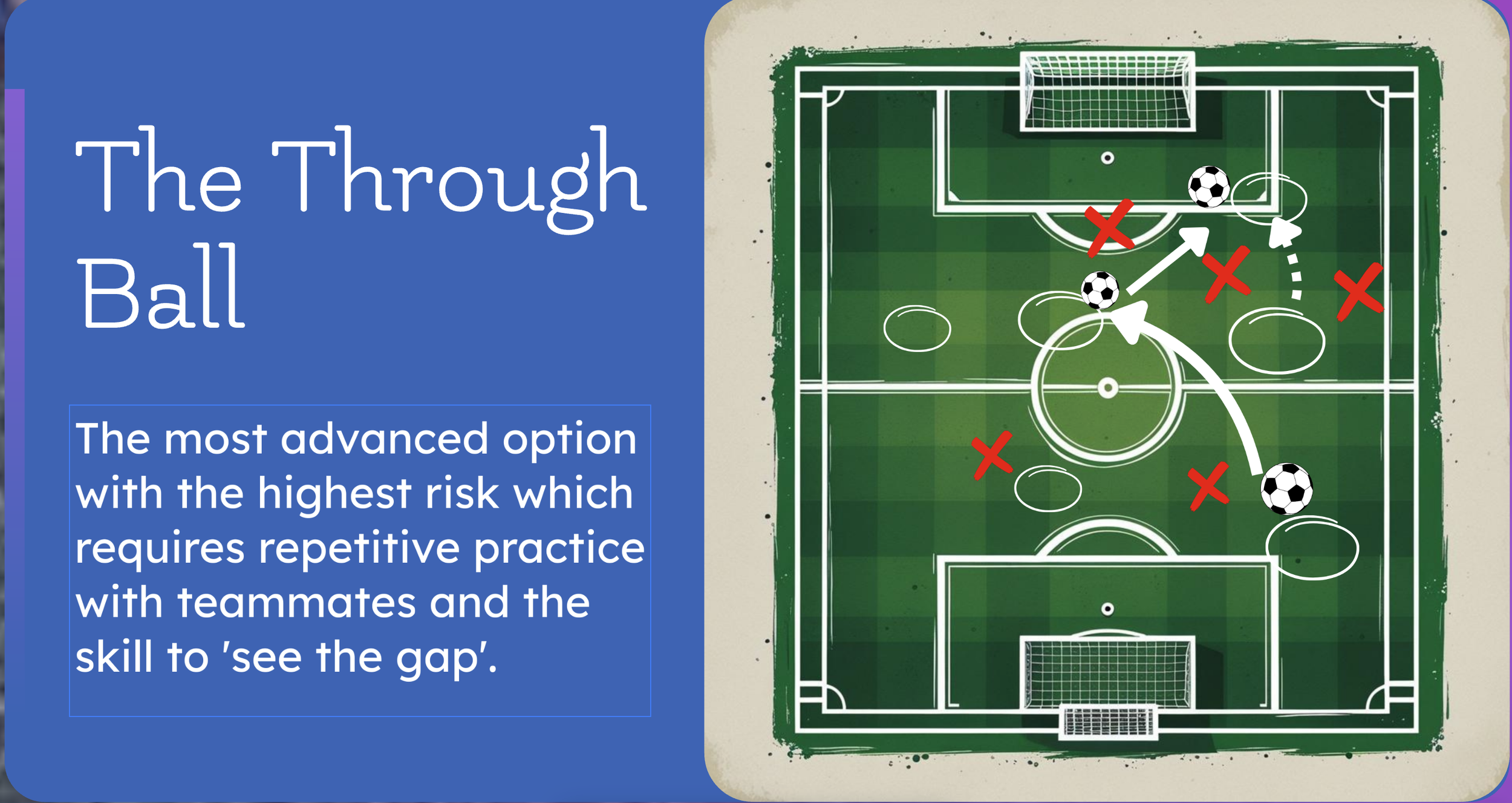
This is the most complex action with the greatest risk and requires the most time/energy/patience to focus on multiple aspects besides just the actual pass. If you are attempting action here you’ve likely had many successful safe passes and several combo passes.
The ability to "see the gap" in this analogy refers to a more in-depth understanding of the systems and outside forces that put up barriers to creating inclusive spaces. This is an option that requires training, making mistakes and adjusting based on those learnings from failure. Remember the goal is to keep the ball (ie. continue to create brave play spaces)!
Some examples:
1. Publicize inclusive gender policy
2. Provide mix gender teams at all ages